
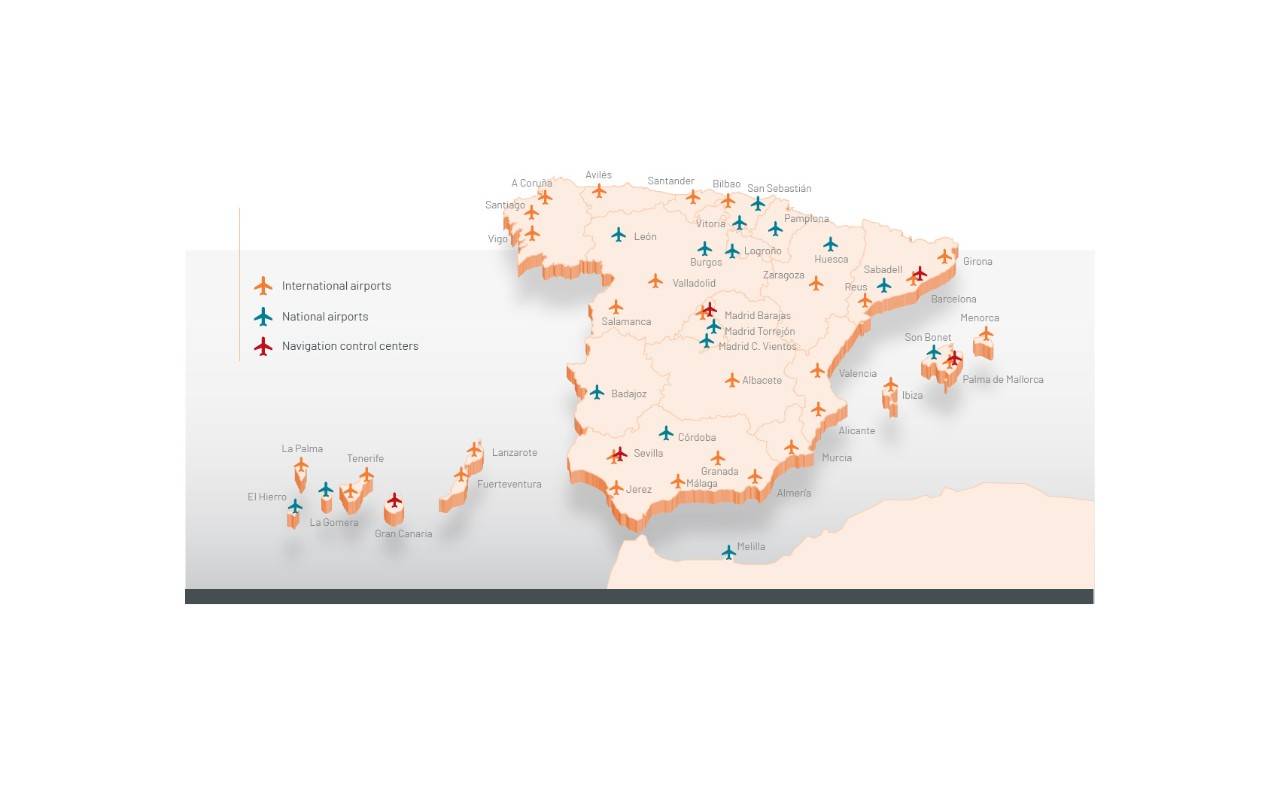
50 airports, most with direct international connections.


Ranks Spain 15th worldwide in distribution infrastructures
Global Competitiveness Report 2018 Spain 26º/140
| Component | Rank/69 |
|---|---|
| 2nd INFRAESTRUCTURE | 27 |
| Air transportation | 9 |
| Internet bandwidth speed | 9 |
| Quality of air transportation | 11 |
| Distribution infrastructure | 15 |
| Energy infrastructure | 23 |
| Railroads | 23 |
| Roads | 24 |
| Investment in telecommunications | 27 |
Land for new business developments as well as office and warehouse space are available in practically all of Spain.
50 airports, most with direct international connections.

The largest network of highways and freeways in the EU (over 17,600 km).

The second most extensive high-speed rail network in the world (3,993 kilometers).

46 ports, including 3 major European ports.

152 logistics parks and the largest logistics platform in Europe, with over 1.3 million m².

The best ratings worldwide for the quality of its railway system, roads and airport services.
Major airline hub

Two of Europe's busiest airports: Madrid and Barcelona.
Flights to four continents, 157 countries and 1,067 international destinations.
930 airlines connect Spain with the Americas, Europe and the Middle East.
Spanish airports register 2.3 million flights. The national airport network handled 309 million passengers in 2024.
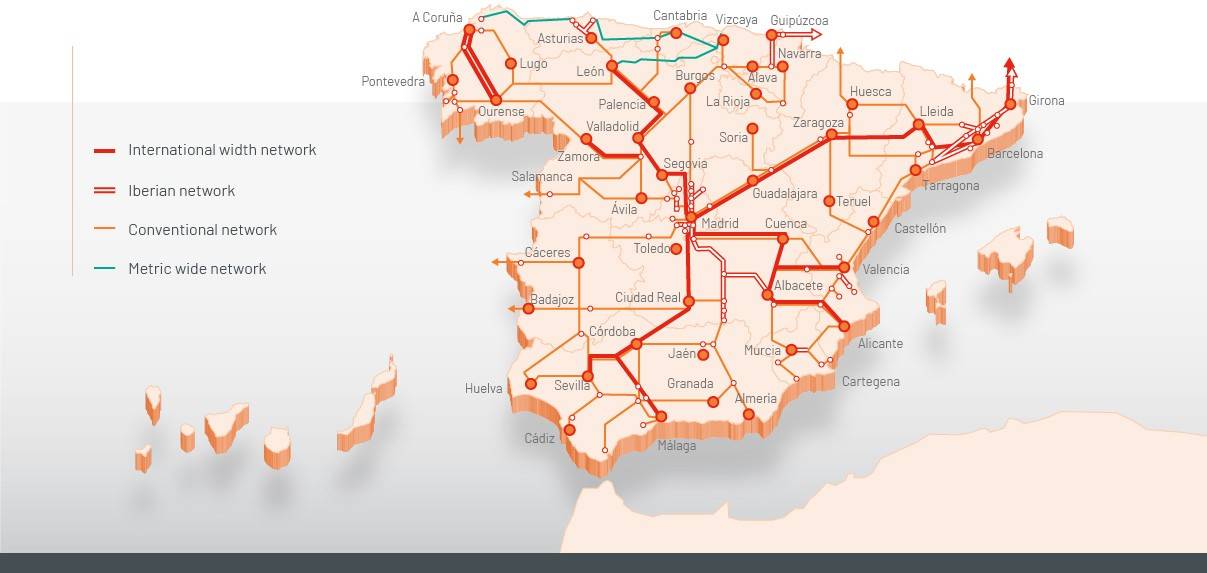
The most extensive high-speed rail network in Europe
Spain is a world leader with over 15,600 km in high-speed and conventional railways.
Spain has completed its conventional railway lines for the TEN-T Trans-European Transport Network.
Spain is the second leading country in the world in high-speed rail.
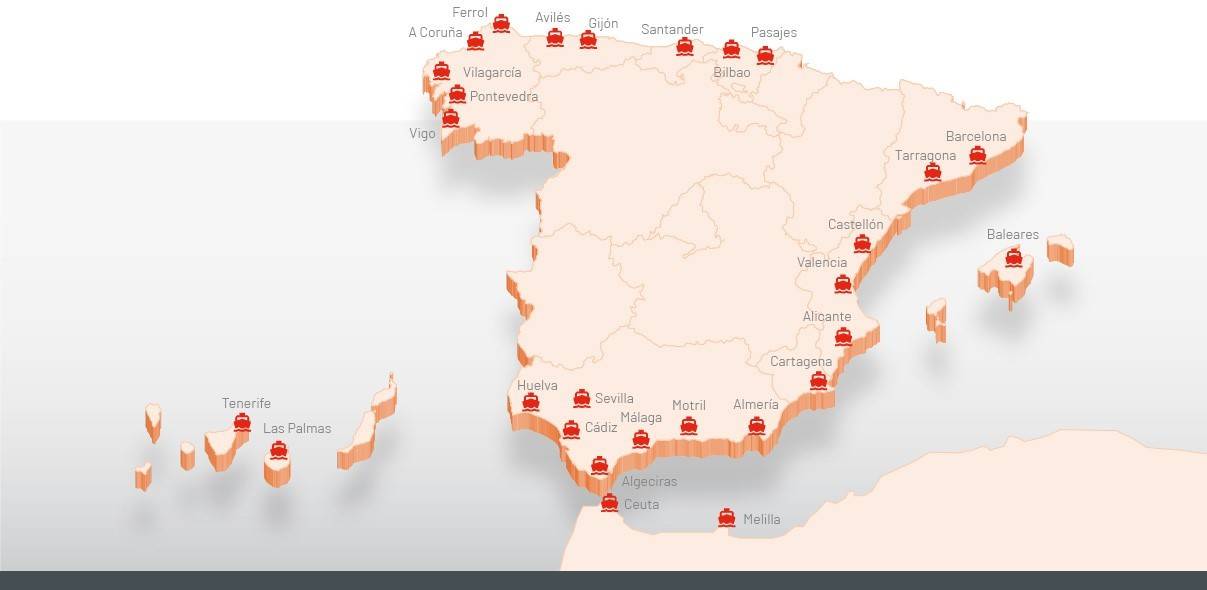
A first-rate maritime platform in southern Europe
More than 560 million tons of goods a year move through Spain’s 46 ports. One in 4 tons are transported to other countries or continents.
It ranks fourth on the continent in maritime passenger traffic, with over 35 million travellers a year.
Spain is the first leading European country in container (TEU's) port moves, and home to three of Europe’s most important ports (Valencia, Barcelona and Algeciras).
Spain has the largest network of highways and freeways in Europe
Spain’s network of excellent highways and freeways extends over 17,600 km, much higher than the European average.
Spain ranks first worldwide in road connectivity according to the WEF Global Competitiveness Report 2019.

There are five logistics activity zones in Spain operating in Algeciras, Barcelona, Bilbao, Motril and Seville; and logistics projects in Alicante, Asturias (Zalia), Cartagena, Castellón, Ferrol, Las Palmas, Sagunto, Santander, Tarragona, Valencia and Vigo (Plisan).
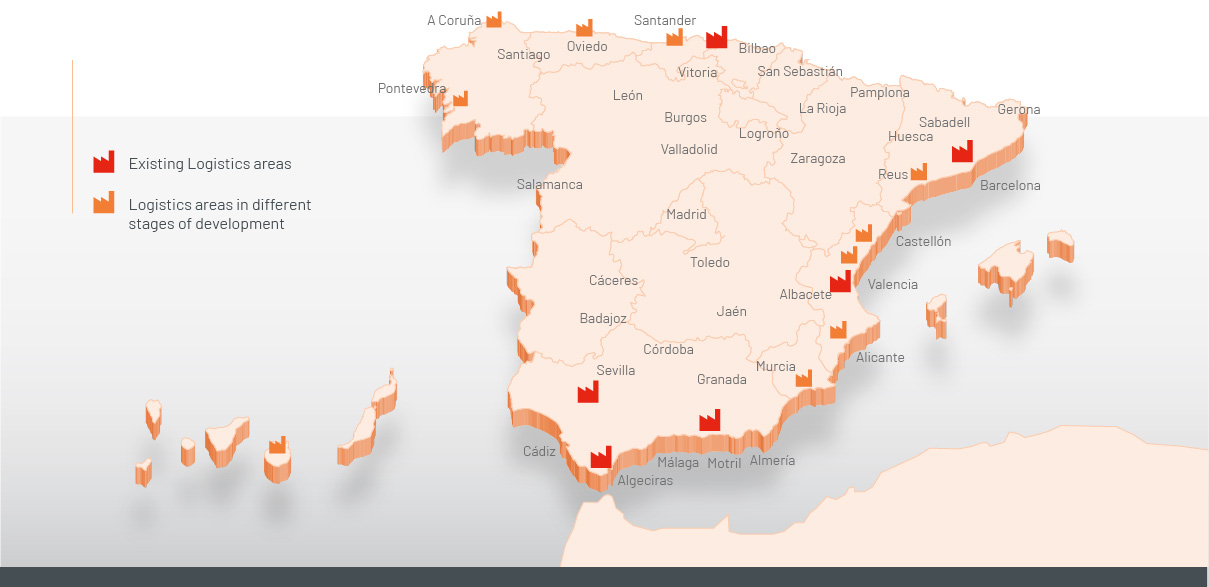
Spain has over 70 logistics nodes strategically distributed throughout the country to boost business opportunities in the provinces.
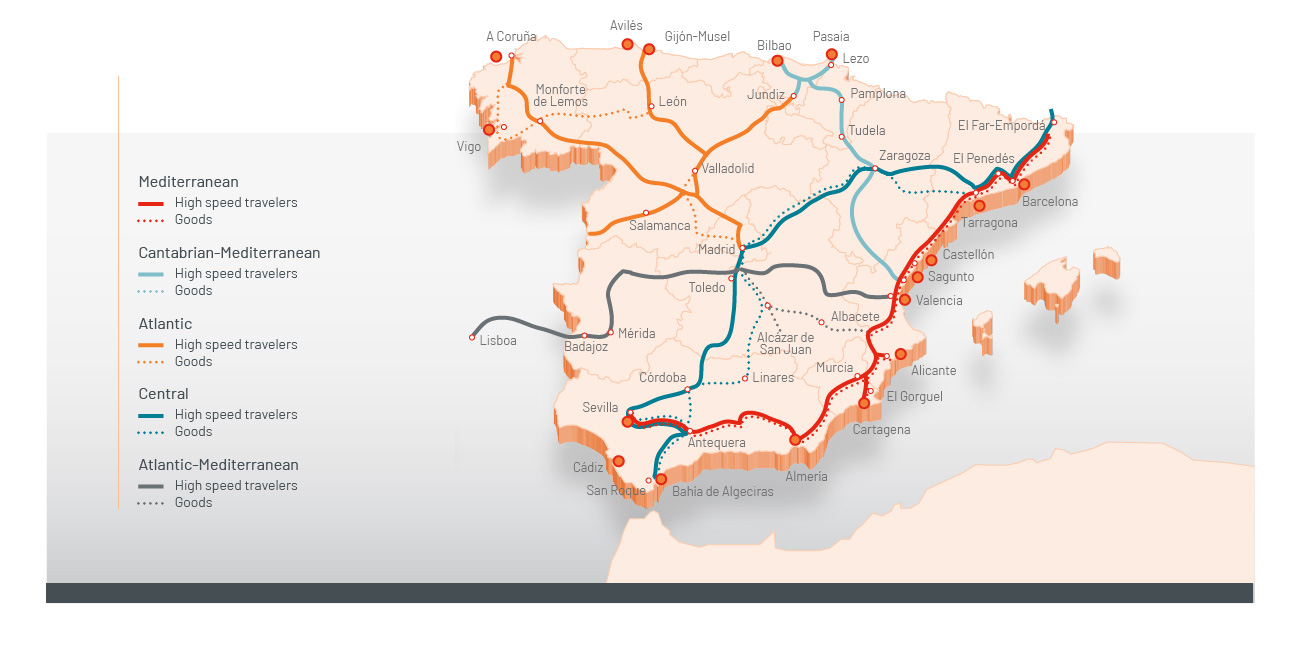
The seven free zone ports in Spain – where companies have certain tax benefits– offer business centers, commercial spaces, office buildings, industrial warehouse rentals, customs bonded warehouses and industrial parks where active inward processing of semi-manufactured goods can be further processed or finished.
Spain has a broad network of dry ports, including Coslada, the major dry port of Madrid, near the Barajas Air Freight Facility.
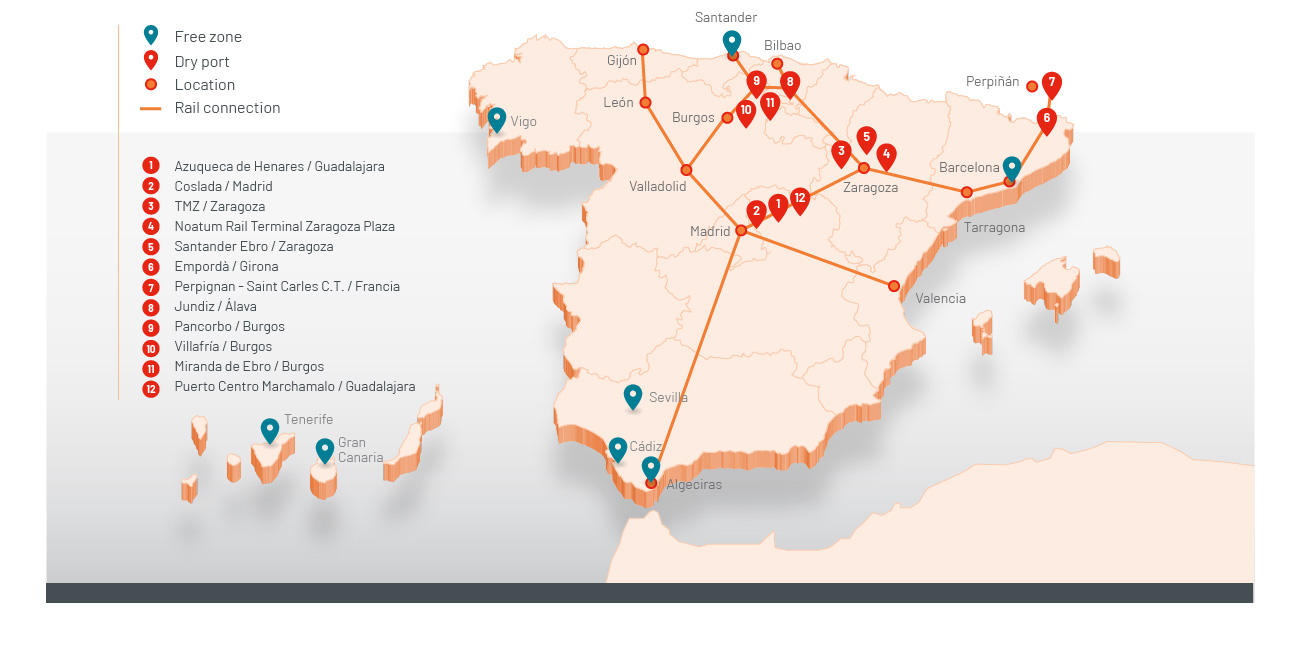
Rapid increase in logistics parks in Spain
In 2024, the total surface area of logistics facilities in Spain reached 88.4 million m², according to OTLE.
The highest concentration of parks is in the autonomous communities of Catalonia, Andalusia, Valencia and Madrid, however, in terms of size, the largest logistics platform in Europe is in the region of Aragon.
Source: Ministry of Transport: Transport and Logistics Observatory in Spain, OTLE
Spain is one of the most advanced countries in 5G Internet
Spain has the highest FTTH (fiber to the home) penetration rate of any country in the European Union.
Furthermore, ultrafast broadband covers 87% of the country, compared to 60% in Europe.
The 2019 DESI report (Digital Economy and Society Index) ranks Spain eighth among countries best prepared for 5G technology deployment, having auctioned 30% of its frequency spectrum compared to an average 14% in the EU.
Spain is also one of the countries to complete more tests, with pilot projects throughout the entire territory, some of which were funded by the 5G Research in Horizon 2020. And thanks to the deployment by the main Spanish telecom operators, Spain is a leader in commercial 5G.
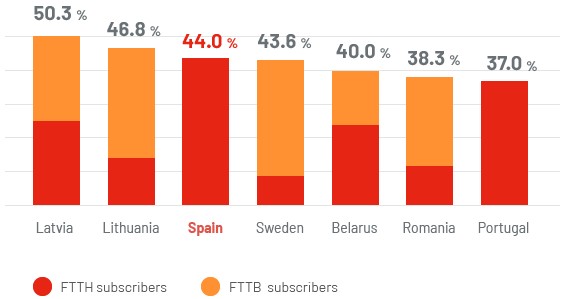
Ranking FTTH/B - European Ranking
Domestic penetration rate by country* with more than 1% of penetration by family.
* Economie with at least 200,000 households, except Island
Source: IDATE for FTTH Council EUROPE, 2019.